
PROTECTING YOU AGAINST DRUG CHARGES IN FL
If you have been accused of a drug crime in Miami or any of the surrounding communities, you could be facing serious consequences if you’re convicted. Florida takes drug crimes extremely seriously, and it’s not uncommon for prosecutors to seek the harshest possible penalties against those who are convicted. If you’ve been arrested and are awaiting trial, you may be wondering what penalties you could be facing for your charges. The penalties listed here are general guidelines, so it’s strongly encouraged you contact a Miami drug crimes attorney as soon as possible to get counsel that’s tailored specifically to your case.
The Miami drug crime defense attorneys at Hager & Schwartz, P.A. have nearly 50 years of combined experience, are former prosecutors, and have handled the full range of drug crime cases in Florida. As former State Prosecutors, we have a unique insight into how your prosecution will approach your case, and we use this knowledge to develop an effective and hard-hitting criminal defense that puts our clients’ rights and needs at the forefront of their case. When you need to protect your rights, freedom, and future, place your trust in our proven lawyers.
Facing drug charges in Miami-Dade County, FL? Call (305) 330-1360 to speak with our Miami drug crime lawyers in a FREE case review!

Call (305) 330-1360 for a free, confidential consultation.
DRUG CASES WE HANDLE
WHAT TO DO AFTER BEING ARRESTED FOR A DRUG OFFENSE IN FL
Being arrested for a drug crime can be scary. If you or a loved one is in this situation, taking certain steps throughout the process may help your case.
Below are some things you can do following an arrest:
- Stay calm: Being handcuffed by a police officer can bring up a range of emotions: frustration, fear, anger. But letting your feelings get the better of you in this situation can potentially hurt you in the long run. Using words or actions to try to stop the arrest can result in obstruction or resisting charges.
- Remain silent: During any interaction with the police, you’re only required to provide them with your personal identifying information. Beyond that, you can politely decline to give statements or answer questions. If you say anything, it can be used as evidence against you. It’s best to wait until you have an attorney present before speaking with law enforcement officials.
- Contact an attorney: You have a right to legal representation at all stages of your drug crime case, that includes during the arrest process. As alluded to above, a Miami drug crime attorney can advise and guide you on interacting with the police when they’re interrogating you. They can let you know how to answer questions or even if you should answer at all.
- Prepare for your defense: Once you’ve retained legal representation, you can begin working on a defense to fight your charge. Make sure you tell your Miami drug crime lawyer everything that led to your arrest, as every detail matters. For instance, if at any point a law enforcement official violated your rights, you may have grounds to have evidence in your case suppressed.
FLORIDA DRUG LAWS AND PENALTIES
In Florida, the nature of the penalties you face will vary greatly depending on several factors, including the type of substance involved, how much of it you have, where the crime occurred, and what your intentions were in committing the crime. For example, someone with possession of a particular drug will face stiffer penalties, but those caught selling the substance will face even more harsh ones.
Drugs are sorted into a variety of controlled substance schedules, which are influenced by how dangerous a drug is in terms of its addiction risk and whether or not it has any accepted medical uses. Schedule IV drugs are generally considered the least severe due to their widely-accepted uses while Schedule I substances are considered the most dangerous.
FLORIDA DRUG SCHEDULES
Various types of drugs are on the street, and some are considered more dangerous than others. Florida separates the different controlled substances into five distinct groups (referred to as schedules). Schedule I contains drugs that are considered the most serious, and Schedule V are considered the least serious.
Florida Statute § 893.03 classifies controlled substances as follows:
SCHEDULE I
These drugs don’t have an accepted medical use and have a high potential for abuse. Substances classified in this group include but are not limited to:
- Heroin
- LSD
- Peyote
- Cannabis, or marijuana
SCHEDULE II
These substances also have a high potential for abuse. Unlike Schedule I drugs, they have an accepted medical use, but dispensing and administering them is severely restricted. Schedule II substances are also likely to lead to severe psychological or physical dependence. Drugs under this classification include but are not limited to:
- Opium
- Morphine
- Oxycodone
- Fentanyl
SCHEDULE III
This group contains drugs that have an accepted medical use. They may cause abuse, but such a result is less likely than with Schedule I or II drugs. The potential for psychological or physical dependence is moderate. Substances in this classification include but are not limited to:
- Buprenorphine
- Embutramide
- Anabolic steroids
- Ketamine
SCHEDULE IV
Compared to substances in the previous three schedules, the potential for abuse of these drugs is low. They also have an accepted medical use and are less likely to lead to physical or psychological dependence than Schedule III drugs. Schedule IV drugs include but are not limited to:
- Barbital
- Clonazepam
- Diazepam
- Tramadol
SCHEDULE V
There is an accepted medical use for these drugs. Compared to Schedule IV substances, the likelihood of abusing these drugs or becoming physically or psychologically dependent on them is low. Drugs in this group include but are not limited to:
- Substances with 200 milligrams or less of codeine per 100 milliliters or 100 grams
- Substances with 100 milligrams or less of opium per 100 milliliters or 100 grams
- Stimulants
ARE DRUG CRIMES A MISDEMEANOR OR FELONY IN MIAMI, FL?
Drug crimes can be considered either a misdemeanor or a felony offense, with the majority of crimes fitting into the felony category.
- Misdemeanor offenses will usually carry a fine of up to 12 months in prison and a fine of around $1,000 for a conviction.
- Felony charges often go well beyond this one-year sentence with some of the most serious charges carrying decades’ worth of prison time and fines that can exceed $10,000 or more.
Most drug crimes also have a mandatory minimum sentence when they reach the felony level, which could range from a minimum prison sentence to large fines.
Have you been accused of a drug crime? Contact Hager & Schwartz, P.A. online now by sending us a message and let us help you fight back against your charges!
HOW PENALTIES FOR DRUG CHARGES ARE DETERMINED IN FL
If you’re found guilty of a drug crime in Florida, a court may sentence you to incarceration and/or fines. The severity of the offense and the schedule of the drug in question will determine the penalties you face. Being caught with a large quantity of a Schedule I substance will result in a heavier charge than being caught with a similar quantity of a Schedule V substance.
To illustrate this, below are the penalties for drug possession in Florida:
- Possession of a Schedule V drug is a second-degree misdemeanor penalized by:
- Up to 60 days in jail and/or
- Up to $500 in fines
- Possession of less than 20 grams of cannabis is a first-degree misdemeanor penalized by:
- Up to 1 year in jail and/or
- Up to $1,000 in fines
- Possession of a controlled substance is a third-degree felony penalized by:
- Up to 5 years in prison and/or
- Up to $5,000 in fines
- Possession of more than 10 grams of certain Schedule I or II drugs is a first-degree felony penalized by:
- Up to 30 years in prison and/or
- Up to $10,000 in fines
DRUG MANUFACTURING IN FLORIDA
Drug manufacturing is a type of drug crime that refers to the production or creation of unlawful controlled substances. A person can be charged with drug manufacturing if he/she was found to be producing or creating illegal narcotics or if he/she is found in possession of precursor chemicals that are associated with the manufacturing of drugs.
WHAT IS DRUG CULTIVATION?
The term “drug cultivation” refers to the growth, possession, and production of an illegal drug, such as marijuana, cocaine, methamphetamines, heroin, LSD, and Ecstasy. In the United States, marijuana cultivation is the most common drug cultivation charge. If you were arrested for drug cultivation in Miami, Florida, you could face serious legal penalties, such as prison and probation.
DRUG MANUFACTURING & CULTIVATION CHARGES IN FL
Once a person has been arrested for manufacturing or cultivating drugs, he/she can be charged with either a misdemeanor or felony drug offense. In most cases, the type and severity of criminal charges will depend upon:
- the type of drug being manufactured
- the amount of drug being manufactured
- if the drugs were manufactured with intent to sell
- the person’s criminal history
- if the person has prior drug crime convictions on his/her criminal record
If you been charged with this crime, you will need to speak with a reputable Miami drug manufacturing attorney who has prior experience handling drug manufacturing cases. Drug manufacturing is a serious drug crime that involves harsh legal consequences. Hager & Schwartz, P.A.’s skill in the area of defending against various drug crimes will work for your benefit. When the consequences are serious, you cannot afford to go through the process alone.
FLORIDA DRUG CULTIVATION DEFENSE STRATEGIES
As Miami drug manufacturing lawyers, our strategies may include:
- A thorough investigation of the arrest
- Scrutinizing police procedure for flaws
- Confirming the alleged drugs involved
- Identifying weaknesses in the prosecution
PROVING A DRUG CULTIVATION CASE IN FL
Prosecutors must demonstrate to facts to obtain a drug cultivation conviction:
- You possessed the controlled substance in question
- You intended to manufacture / cultivate the drug
SENTENCING ENHANCEMENT ZONES IN FLORIDA
According to F.S.A. §893.13, if you are convicted for committing a drug offense near a sentencing enhancement zone, you will be sentenced to a three-year mandatory minimum jail sentence. This is in addition to other penalties such as fines, probation, license suspension, mandatory community service, and more.
Each state has different laws for where drug penalties may increase. If you commit a drug offense within 1,000 feet of one of the following locations in Florida, you face more severe criminal penalties. These include:
- Schools
- Universities or college campuses
- Churches
- Daycares
- Public housing complexes
- Parks
It is important to note that a simple possession charge near one of these locations will not result in an enhanced sentence. The offenses that are covered include:
- Possession with intent to sell
- Delivery
- Sale
- Manufacture
DRUG CRIME MANDATORY MINIMUM JAIL SENTENCES IN FL
Certain offenses require that the defendant be sentenced to spend a mandatory amount of time in jail. In these instances, the judge cannot alter the sentence to be less than the mandatory minimum amount.
If you’re charged with a drug crime in Florida, chances are you’re wondering what the mandatory minimum sentences are for the offense. The answer really depends on a few key factors, such as the type and amount of drug involved, as well as whether or not you have prior drug convictions.
However, some common mandatory minimums include:
- 3 years in prison for possession of 28 grams or more of cocaine or heroin
- 15 years to life for trafficking 28 grams or more of these drugs
It’s important to remember that these are just general guidelines – each case is unique and sentencing can vary depending on other factors such as cooperation with law enforcement. This type of sentencing has been highly criticized in recent years for requiring relatively low-level offenders to be incarcerated unnecessarily.
ALTERNATIVE SENTENCING FOR FLORIDA DRUG CRIMES
In some cases, in lieu of incarceration, a person convicted of a drug crime may be eligible for alternative sentencing. This means that they would participate in a treatment program or other services designed to rehabilitate them and give them the skills they need to reenter society, reducing the risk of reoffending. Upon successful completion, their case would be dismissed.
Alternative sentencing programs may include:
- Participating in a drug education course
- Completing community service
- Attending a substance abuse course
- Receiving substance abuse education with a licensed provider
- Completing a drug abuse assessment
Individuals seeking this option must meet eligibility requirements. For instance, they must not have a criminal history and must have been charged with a specific crime. Additionally, they must submit their intent to participate to the prosecutor and may be required to go through an interview/screening to determine whether they’ll be accepted.
Our Miami drug defense lawyers can go over your eligibility for alternative sentencing, as well as discuss if it’s the right option for you and your case.
FLORIDA PRESCRIPTION DRUG LAWS
Drug crimes involve not just illegal street drugs but also prescription drugs. This is one of the fastest-growing types of drug trafficking in Florida, and it is commonly associated with charges of “doctor shopping.” Many prescription drugs are considered Schedule II substances, including oxycodone, fentanyl, hydrocodone, Adderall, Percocet, and Ritalin. Although they are currently accepted for medical use, access to these narcotics is quite limited. Other prescription medications fall under Schedule III, IV, and V drugs.
Some of the most common prescription drugs that are associated with drug crime arrests include:
- OxyContin
- Opana
- Adderall
Florida’s laws concerning the possession of prescription drugs are extremely strict and open the door for prosecutors to charge offenders with “trafficking” offenses for carrying even a small amount of a prescription drug. If law enforcement discovers a significant amount of prescription medication in a person’s possession, he/she may be charged with drug trafficking.
PRESCRIPTION DRUG CRIME PENALTIES IN MIAMI, FL
Unlawful possession of a prescribed drug happens when a person gains access to a narcotic without a doctor’s prescription.
- Unlawful possession of a Schedule II narcotic is a third-degree felony, punishable by a maximum five-year prison sentence and a fine no larger than $5,000.
- Possession with intent to sell a Schedule II drug is a second-degree felony, resulting in a maximum 15-year prison term and a fine of up to $10,000.
The laws surrounding prescription drug cases can be interpreted differently and may be confusing for those who are not familiar with the criminal justice system. If you’ve found yourself with a prescription drug charge, don’t wait to contact our Miami drug crime lawyer.
WHAT IS PRESCRIPTION FRAUD?
Prescription fraud is defined as gaining access to a controlled substance through fraud and misrepresentation. Common examples include forging a doctor’s signature on a prescription pad, providing false information to obtain a prescription, and “doctor shopping.” These are considered a third-degree felony in Florida and punishable by up to 5 years in Florida State Prison and a $5,000 fine.
WHAT IS DOCTOR SHOPPING?
Doctor shopping is a crime that involves seeing a doctor for the purpose of obtaining prescriptions while not disclosing to that doctor that they already have multiple other prescriptions filled from another doctor.
Withholding information from a practitioner is becoming more and more popular as pain management clinics are growing in number throughout the state. As a result, law enforcement officers have started investigating innocent patients simply because they have received treatment prescribed by a medical professional.
If you have been arrested for a prescription drug crime in Florida, contact our Miami drug defense lawyers and request a confidential consultation today.
AGGRESSIVE DEFENSE FROM A MIAMI DRUG CRIME LAWYER
Drug crimes penalties will vary depending upon the offense itself, the type of drug, and the amount involved. In some cases, a drug crime conviction in Florida may result in up to 15 years imprisonment in a state correctional facility. In other cases (usually involving non-violent first-time offenders) alternative sentencing may be available in lieu of jail time. Your Miami drug crime attorney can review your particular case and determine what options may be available to you.
Defending any drug crime charge is not easy. It requires dedication, persistence and a thorough understanding of Florida case law and legislation involving all types of drug charges. At Hager & Schwartz, P.A., our experienced Miami drug crime attorneys have what it takes to be effective. Let us show you how we can protect your rights and help you avoid conviction. We represent clients throughout all of Miami-Dade County and the surrounding areas.
Call our Miami drug crime lawyers at (305) 330-1360 to request a FREE consultation.
RECOMMENDED READING
Tell us how we can reach you. Our team is available 24/7.
"*" indicates required fields
- Florida prosecutors often seek harsh penalties for drug crimes.
- Trafficking charges can carry mandatory minimum prison sentences.
- You only have to give police your identifying information.
- Evidence from an illegal search can be suppressed.
Being arrested for a drug crime can be scary. If you or a loved one is in this situation, taking certain steps throughout the process may help your case.
Below are some things you can do following an arrest:
- Stay calm: Being handcuffed by a police officer can bring up a range of emotions: frustration, fear, anger. But letting your feelings get the better of you in this situation can potentially hurt you in the long run. Using words or actions to try to stop the arrest can result in obstruction or resisting charges.
- Remain silent: During any interaction with the police, you’re only required to provide them with your personal identifying information. Beyond that, you can politely decline to give statements or answer questions. If you say anything, it can be used as evidence against you. It’s best to wait until you have an attorney present before speaking with law enforcement officials.
- Contact an attorney: You have a right to legal representation at all stages of your drug crime case, that includes during the arrest process. As alluded to above, a Miami drug crime attorney can advise and guide you on interacting with the police when they’re interrogating you. They can let you know how to answer questions or even if you should answer at all.
- Prepare for your defense: Once you’ve retained legal representation, you can begin working on a defense to fight your charge. Make sure you tell your Miami drug crime lawyer everything that led to your arrest, as every detail matters. For instance, if at any point a law enforcement official violated your rights, you may have grounds to have evidence in your case suppressed.
In Florida, the nature of the penalties you face will vary greatly depending on several factors, including the type of substance involved, how much of it you have, where the crime occurred, and what your intentions were in committing the crime. For example, someone with possession of a particular drug will face stiffer penalties, but those caught selling the substance will face even more harsh ones.
Drugs are sorted into a variety of controlled substance schedules, which are influenced by how dangerous a drug is in terms of its addiction risk and whether or not it has any accepted medical uses. Schedule IV drugs are generally considered the least severe due to their widely-accepted uses while Schedule I substances are considered the most dangerous.
Various types of drugs are on the street, and some are considered more dangerous than others. Florida separates the different controlled substances into five distinct groups (referred to as schedules). Schedule I contains drugs that are considered the most serious, and Schedule V are considered the least serious.
Florida Statute § 893.03 classifies controlled substances as follows:
These drugs don’t have an accepted medical use and have a high potential for abuse. Substances classified in this group include but are not limited to:
- Heroin
- LSD
- Peyote
- Cannabis, or marijuana
These substances also have a high potential for abuse. Unlike Schedule I drugs, they have an accepted medical use, but dispensing and administering them is severely restricted. Schedule II substances are also likely to lead to severe psychological or physical dependence. Drugs under this classification include but are not limited to:
- Opium
- Morphine
- Oxycodone
- Fentanyl
This group contains drugs that have an accepted medical use. They may cause abuse, but such a result is less likely than with Schedule I or II drugs. The potential for psychological or physical dependence is moderate. Substances in this classification include but are not limited to:
- Buprenorphine
- Embutramide
- Anabolic steroids
- Ketamine
Compared to substances in the previous three schedules, the potential for abuse of these drugs is low. They also have an accepted medical use and are less likely to lead to physical or psychological dependence than Schedule III drugs. Schedule IV drugs include but are not limited to:
- Barbital
- Clonazepam
- Diazepam
- Tramadol
There is an accepted medical use for these drugs. Compared to Schedule IV substances, the likelihood of abusing these drugs or becoming physically or psychologically dependent on them is low. Drugs in this group include but are not limited to:
- Substances with 200 milligrams or less of codeine per 100 milliliters or 100 grams
- Substances with 100 milligrams or less of opium per 100 milliliters or 100 grams
- Stimulants
Drug crimes can be considered either a misdemeanor or a felony offense, with the majority of crimes fitting into the felony category.
- Misdemeanor offenses will usually carry a fine of up to 12 months in prison and a fine of around $1,000 for a conviction.
- Felony charges often go well beyond this one-year sentence with some of the most serious charges carrying decades’ worth of prison time and fines that can exceed $10,000 or more.
Most drug crimes also have a mandatory minimum sentence when they reach the felony level, which could range from a minimum prison sentence to large fines.
Have you been accused of a drug crime? Contact Hager & Schwartz, P.A. online now by sending us a message and let us help you fight back against your charges!
If you’re found guilty of a drug crime in Florida, a court may sentence you to incarceration and/or fines. The severity of the offense and the schedule of the drug in question will determine the penalties you face. Being caught with a large quantity of a Schedule I substance will result in a heavier charge than being caught with a similar quantity of a Schedule V substance.
To illustrate this, below are the penalties for drug possession in Florida:
- Possession of a Schedule V drug is a second-degree misdemeanor penalized by:
- Up to 60 days in jail and/or
- Up to $500 in fines
- Possession of less than 20 grams of cannabis is a first-degree misdemeanor penalized by:
- Up to 1 year in jail and/or
- Up to $1,000 in fines
- Possession of a controlled substance is a third-degree felony penalized by:
- Up to 5 years in prison and/or
- Up to $5,000 in fines
- Possession of more than 10 grams of certain Schedule I or II drugs is a first-degree felony penalized by:
- Up to 30 years in prison and/or
- Up to $10,000 in fines
Drug manufacturing is a type of drug crime that refers to the production or creation of unlawful controlled substances. A person can be charged with drug manufacturing if he/she was found to be producing or creating illegal narcotics or if he/she is found in possession of precursor chemicals that are associated with the manufacturing of drugs.
The term “drug cultivation” refers to the growth, possession, and production of an illegal drug, such as marijuana, cocaine, methamphetamines, heroin, LSD, and Ecstasy. In the United States, marijuana cultivation is the most common drug cultivation charge. If you were arrested for drug cultivation in Miami, Florida, you could face serious legal penalties, such as prison and probation.
Once a person has been arrested for manufacturing or cultivating drugs, he/she can be charged with either a misdemeanor or felony drug offense. In most cases, the type and severity of criminal charges will depend upon:
- the type of drug being manufactured
- the amount of drug being manufactured
- if the drugs were manufactured with intent to sell
- the person’s criminal history
- if the person has prior drug crime convictions on his/her criminal record
If you been charged with this crime, you will need to speak with a reputable Miami drug manufacturing attorney who has prior experience handling drug manufacturing cases. Drug manufacturing is a serious drug crime that involves harsh legal consequences. Hager & Schwartz, P.A.’s skill in the area of defending against various drug crimes will work for your benefit. When the consequences are serious, you cannot afford to go through the process alone.
As Miami drug manufacturing lawyers, our strategies may include:
- A thorough investigation of the arrest
- Scrutinizing police procedure for flaws
- Confirming the alleged drugs involved
- Identifying weaknesses in the prosecution
Prosecutors must demonstrate to facts to obtain a drug cultivation conviction:
- You possessed the controlled substance in question
- You intended to manufacture / cultivate the drug
According to F.S.A. §893.13, if you are convicted for committing a drug offense near a sentencing enhancement zone, you will be sentenced to a three-year mandatory minimum jail sentence. This is in addition to other penalties such as fines, probation, license suspension, mandatory community service, and more.
Each state has different laws for where drug penalties may increase. If you commit a drug offense within 1,000 feet of one of the following locations in Florida, you face more severe criminal penalties. These include:
- Schools
- Universities or college campuses
- Churches
- Daycares
- Public housing complexes
- Parks
It is important to note that a simple possession charge near one of these locations will not result in an enhanced sentence. The offenses that are covered include:
- Possession with intent to sell
- Delivery
- Sale
- Manufacture
Certain offenses require that the defendant be sentenced to spend a mandatory amount of time in jail. In these instances, the judge cannot alter the sentence to be less than the mandatory minimum amount.
If you’re charged with a drug crime in Florida, chances are you’re wondering what the mandatory minimum sentences are for the offense. The answer really depends on a few key factors, such as the type and amount of drug involved, as well as whether or not you have prior drug convictions.
However, some common mandatory minimums include:
- 3 years in prison for possession of 28 grams or more of cocaine or heroin
- 15 years to life for trafficking 28 grams or more of these drugs
It’s important to remember that these are just general guidelines – each case is unique and sentencing can vary depending on other factors such as cooperation with law enforcement. This type of sentencing has been highly criticized in recent years for requiring relatively low-level offenders to be incarcerated unnecessarily.
In some cases, in lieu of incarceration, a person convicted of a drug crime may be eligible for alternative sentencing. This means that they would participate in a treatment program or other services designed to rehabilitate them and give them the skills they need to reenter society, reducing the risk of reoffending. Upon successful completion, their case would be dismissed.
Alternative sentencing programs may include:
- Participating in a drug education course
- Completing community service
- Attending a substance abuse course
- Receiving substance abuse education with a licensed provider
- Completing a drug abuse assessment
Individuals seeking this option must meet eligibility requirements. For instance, they must not have a criminal history and must have been charged with a specific crime. Additionally, they must submit their intent to participate to the prosecutor and may be required to go through an interview/screening to determine whether they’ll be accepted.
Our Miami drug defense lawyers can go over your eligibility for alternative sentencing, as well as discuss if it’s the right option for you and your case.
Drug crimes involve not just illegal street drugs but also prescription drugs. This is one of the fastest-growing types of drug trafficking in Florida, and it is commonly associated with charges of “doctor shopping.” Many prescription drugs are considered Schedule II substances, including oxycodone, fentanyl, hydrocodone, Adderall, Percocet, and Ritalin. Although they are currently accepted for medical use, access to these narcotics is quite limited. Other prescription medications fall under Schedule III, IV, and V drugs.
Some of the most common prescription drugs that are associated with drug crime arrests include:
- OxyContin
- Opana
- Adderall
Florida’s laws concerning the possession of prescription drugs are extremely strict and open the door for prosecutors to charge offenders with “trafficking” offenses for carrying even a small amount of a prescription drug. If law enforcement discovers a significant amount of prescription medication in a person’s possession, he/she may be charged with drug trafficking.
Unlawful possession of a prescribed drug happens when a person gains access to a narcotic without a doctor’s prescription.
- Unlawful possession of a Schedule II narcotic is a third-degree felony, punishable by a maximum five-year prison sentence and a fine no larger than $5,000.
- Possession with intent to sell a Schedule II drug is a second-degree felony, resulting in a maximum 15-year prison term and a fine of up to $10,000.
The laws surrounding prescription drug cases can be interpreted differently and may be confusing for those who are not familiar with the criminal justice system. If you’ve found yourself with a prescription drug charge, don’t wait to contact our Miami drug crime lawyer.
Prescription fraud is defined as gaining access to a controlled substance through fraud and misrepresentation. Common examples include forging a doctor’s signature on a prescription pad, providing false information to obtain a prescription, and “doctor shopping.” These are considered a third-degree felony in Florida and punishable by up to 5 years in Florida State Prison and a $5,000 fine.
Doctor shopping is a crime that involves seeing a doctor for the purpose of obtaining prescriptions while not disclosing to that doctor that they already have multiple other prescriptions filled from another doctor.
Withholding information from a practitioner is becoming more and more popular as pain management clinics are growing in number throughout the state. As a result, law enforcement officers have started investigating innocent patients simply because they have received treatment prescribed by a medical professional.
If you have been arrested for a prescription drug crime in Florida, contact our Miami drug defense lawyers and request a confidential consultation today.
Drug crimes penalties will vary depending upon the offense itself, the type of drug, and the amount involved. In some cases, a drug crime conviction in Florida may result in up to 15 years imprisonment in a state correctional facility. In other cases (usually involving non-violent first-time offenders) alternative sentencing may be available in lieu of jail time. Your Miami drug crime attorney can review your particular case and determine what options may be available to you.
Defending any drug crime charge is not easy. It requires dedication, persistence and a thorough understanding of Florida case law and legislation involving all types of drug charges. At Hager & Schwartz, P.A., our experienced Miami drug crime attorneys have what it takes to be effective. Let us show you how we can protect your rights and help you avoid conviction. We represent clients throughout all of Miami-Dade County and the surrounding areas.
Call our Miami drug crime lawyers at (305) 330-1360 to request a FREE consultation.
HOW OUR ATTORNEYS PREPARE YOUR CASE
We preserve surveillance footage, photographs, dispatch recordings, body-camera video, medical records, phone data, and witness communications before they disappear. We investigate the scene, test the State’s timeline, and identify whether self-defense, accident, credibility problems, or unlawful police conduct changes the case.

TRUSTED WHEN THE STAKES ARE HIGH

They answered every question, kept me informed, and gave me confidence at every stage. The case was dismissed.

Former client
Brett was attentive, direct, and prepared. His strategy went above and beyond, and I could not be more pleased with the result.
Google review
The team treated my family with respect and acted quickly. We always knew what was happening next.
Miami client
THE TEAM WHO WILL FIGHT FOR YOU
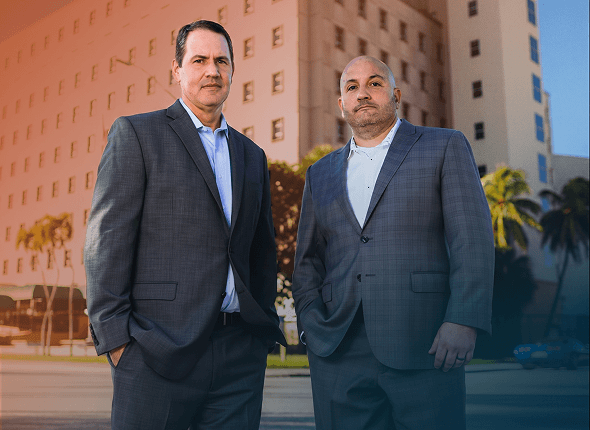
Brett M. Schwartz and John S. Hager bring more than 50 years of combined experience to state and federal criminal cases. You work directly with an attorney who knows your file and is prepared to answer when the situation changes."*" indicates required fields
