
OUR MIAMI DUI LAWYERS CAN HELP PREPARE YOU
Florida has very strict laws for preventing DUI’S, which continuously become tighter, and thus places harsh punishments on those who are eventually convicted of the charges. DUI’s are very serious matters, so whether or not you are currently facing DUI charges, you should know all about all of the possible penalties. A DUI conviction on your record can have a negative impact on your reputation, as well as your future, making it difficult to pursue your goals. That is why is vital to consult with a Miami DUI attorney to help fight your charges.

Call (305) 330-1360 for a free, confidential consultation.
We have 40+ years of experience working with clients who are facing serious criminal charges, including DUI. Call today and schedule a no-cost, confidential consultation with Hager & Schwartz, P.A.!
FINES S. 316.193(2)(A)-(B), F.S.
The fines for DUI penalties vary, but can be steep the more convictions that are accumulated on your record.
Here are the schedule of fines:
- 1st conviction: no less than $250, not exceeding $500
- 2nd conviction: no less than $500, not exceeding $1, 000
- 3rd conviction (more than 10 years): no less than $1, 000, no more than $2, 500
- 3rd conviction (within 10 years): no less than $1, 000, no more than $5, 000
- 4 or more convictions: no less than $1, 000
Other factors can also raise the penalties or the price of the fines. For example, if someone is carrying a minor in the car while driving drunk, that person can be charged with the penalties for child endangerment and DUI. In Florida, if your BAL, or blood/breath alcohol level, is above .20%, the fines rise significantly.
Here is the fine schedule for convictions where the BAL was found to be more than .20%:
- 1st conviction: no less than $500, no more than $1, 000
- 2nd conviction: no less than $1, 000, no more than $2, 000
- 3rd conviction (more than 10 years): no less than $2, 000
- 3rd conviction (in 10 years): no less than $2, 000
- 4 or more convictions: no less than $2, 000
POSSIBLE PRISON SENTENCING S. 316.193 (2)(A) 2, 4(B), (6)(J), F.S.
In addition to fines, many who are convicted can face imprisonment. Under the law, a first or second DUI offense may be charged as misdemeanors, which means that the individual may go to a local or a county jail, up to one year. Felonies, on the other hand, are elevated charges, which means that the person could face at least one year in state prison. At the court’s discretion, some of the sentence may be served during a treatment program for either drug abuse or alcoholism, and this would be counted towards the imprisonment terms.
These are current terms for imprisonment:
- 1st conviction: no more than 6 months
- 2nd conviction: no more than 9 months; if within 5 years, mandatory imprisonment for 10 days and 48 hours of confinement is to be consecutive
- 3rd conviction (within 10 years): mandatory imprisonment for at least 30 days; 48 hours of consecutive confinement
- 3rd conviction (more than 10 years): imprisonment no more than 12 months
- 4 or more convictions: no more than 5 years, or according to s.775.084, Florida Statutes, as a habitual or violent offender
With a BAL over .20% or a minor in the vehicle, the sentences become enhanced:
- 1st conviction: no more than 9 months
- 2nd conviction: no more than 12 months
IMPOUNDMENT OR IMMOBILIZATION OF VEHICLE – S. 316.193 (6), F.S.
The vehicle of someone convicted of a DUI can be impounded or immobilized under Florida law. The vehicle may not be impounded or immobilized while the individual is serving a jail or prison term.
The duration of impoundment depends on your conviction:
- 1st conviction: 10 days
- 2nd conviction (within 5 years): 30 days
- 3rd conviction (within 10 years): 90 days
Courts can exercise the right to throw out any orders for vehicle impoundment or immobilization if the individual’s family has no other means or transportation or if the vehicle is driven primarily by employees of or businesses owned by the individual.
DUI MISDEMEANOR INVOLVING PROPERTY DAMAGE OR PERSONAL INJURY-S. 316.193 (3), F.S.
If it is found during the process of a DUI conviction that the individual caused property damage or an injury was involved, that person may be charged with a first-degree misdemeanor. The punishment may include a fine of up to $1, 000 and even one-year imprisonment.
DUI FELONY: REPEAT OFFENDERS OR SERIOUS BODILY INJURY IN AN ACCIDENT S. 316.193 (2),(3) F.S.
Three DUI’s within a 10-year time span, or four or more can constitute a third-degree felony charge. That individual could face fines no more than $5, 000 or five years in state prison.
If the accident resulted in serious bodily injury to another, this can constitute a third-degree felony charge, which could mean no more than a fine of $5, 000 and five years in state prison. A habitual/violent offender, as noted in s. 775.084, F.S. may also face a possible felony charge.
Manslaughter and vehicular homicide (s. 316.193 (3), F.S.) are other possible crimes that can happen when driving under the influence. These are also felony level charges, with varying sets of penalties based on the circumstances pertaining to the incident.
Here is more information about these charges:
- DUI manslaughter: 2nd degree felony; fines no more than $10, 000 and/or 15 years in prison
- DUI manslaughter/leaving the scene: 1st degree felony; no more than $10, 000 fine and/or 30 years in prison
- Vehicular homicide: 2nd degree felony; fine no more than $10, 000 and/or 15 years in prison
- Vehicular homicide/leaving the scene: 1st degree felony; no more than $10, 000 fine and/or 30 years in prison
Arrested in Miami or anywhere in the surrounding areas of Florida? Please visit our home page to learn more about criminal defense and the criminal defense process. Our Miami DUI attorneys have years of experience defending charges ranging from DUI, simple drug possession, all the way to major felony offense.
DRIVER LICENSE REVOCATION PERIODS FOR DUI-S. 322.271, F.S. AND S. 322.28,F.S.
Driver’s licenses may be revoked for a certain period of time, depending on whether the conviction was a first, second, or third offense. The terms of this revocation must be served out to completion, however, you can apply to reinstate your license due to hardship close to the end of the period. You will need to pay administrative fees, license fees, as well as attend DUI school. Even if you decide to allow the revocation period to pass, you will still need to take the above steps in order to have your license reinstated.
Here are the current revocation periods:
- 1st conviction: 180 days minimum, up to 1 year
- 2nd conviction (within 5 years): 5 years minimum; eligible to reinstate due to hardship after 1 year
- 3rd conviction (within 10 years): 10 years minimum; eligible to reinstate due to hardship after 2 years
- 4th conviction or murder with motor vehicle: revocation is permanent and no eligibility for reinstatement
- DUI manslaughter: 3-year minimum
DUI SCHOOL REQUIREMENTS – S. 316.193 F.S., S. 322.271, F.S., S. 322.291, F.S.
DUI school is required by Florida law for those convicted of driving under the influence. It is also a necessary component of reinstating your license due to hardship. You must be able to show proof of enrollment or a certificate of completion within 90 days of filing to reinstate; otherwise, the application will be canceled.
Here are the list of requirements:
- 1st conviction: DUI school to be completed before reinstatement
- 2nd conviction in 5 years or 3rd conviction in 10 years: DUI school to be completed after conviction
- DUI manslaughter with no prior related conviction: permanent revocation; there is a 5-year wait period before one can apply for hardship reinstatement. DUI school must be completed prior.
A note about reckless driving: If you were charged with reckless driving and there was enough cause to believe that alcohol or drugs contributed to the charge, the court may order you to attend DUI school before allowing reinstatement of your license, regardless of the fact that the charge is less severe than DUI.
If you were being treated for a condition following a psychosocial evaluation, your attendance will not be waived unless a court-appointed agency can review these results.
ADMINISTRATIVE SUSPENSION LAW – S. 322.2615, F.S., S. 316.193, F.S., S. 316.1932, F.S.
Florida enacts administrative suspension law, which means that law enforcement has the right to and can immediately take away the license of anyone suspected to be driving under the influence. Refusing to take a breath test to measure the blood-alcohol level can further enhance the possible punishments.
These are the current laws under administrative suspension:
- 1st suspension for driving with a blood-alcohol level above .08%: 6 months
- 2 or more suspensions for driving with a blood-alcohol level above .08%: 1 year
- 1st suspension for refusing to submit to a blood, urine, or alcohol exam: 1 year
- 2 or more suspensions for refusing to submit: 18 months
Suspensions can take place immediately following an arrest, however, a temporary permit that is valid for 10 days can be issued to eligible drivers. During that period, driving may only take place to transport the individual to and from work, to run errands such as grocery shopping, doctor’s office, etc. No driving for personal pleasure or satisfaction may take place, as the courts will not allow this.
Have you been charged with a DUI? Contact a Miami DUI Lawyer at our firm as soon as possible to learn more about the penalties and suspensions and to see how we can help you overcome your charge!
Tell us how we can reach you. Our team is available 24/7.
"*" indicates required fields
- 1st conviction: no less than $250, not exceeding $500
- 2nd conviction: no less than $500, not exceeding $1, 000
- 3rd conviction (more than 10 years): no less than $1, 000, no more than $2, 500
- 3rd conviction (within 10 years): no less than $1, 000, no more than $5, 000
- 4 or more convictions: no less than $1, 000
We have 40+ years of experience working with clients who are facing serious criminal charges, including DUI. Call today and schedule a no-cost, confidential consultation with Hager & Schwartz, P.A.!
The fines for DUI penalties vary, but can be steep the more convictions that are accumulated on your record.
Here are the schedule of fines:
- 1st conviction: no less than $250, not exceeding $500
- 2nd conviction: no less than $500, not exceeding $1, 000
- 3rd conviction (more than 10 years): no less than $1, 000, no more than $2, 500
- 3rd conviction (within 10 years): no less than $1, 000, no more than $5, 000
- 4 or more convictions: no less than $1, 000
Other factors can also raise the penalties or the price of the fines. For example, if someone is carrying a minor in the car while driving drunk, that person can be charged with the penalties for child endangerment and DUI. In Florida, if your BAL, or blood/breath alcohol level, is above .20%, the fines rise significantly.
Here is the fine schedule for convictions where the BAL was found to be more than .20%:
- 1st conviction: no less than $500, no more than $1, 000
- 2nd conviction: no less than $1, 000, no more than $2, 000
- 3rd conviction (more than 10 years): no less than $2, 000
- 3rd conviction (in 10 years): no less than $2, 000
- 4 or more convictions: no less than $2, 000
In addition to fines, many who are convicted can face imprisonment. Under the law, a first or second DUI offense may be charged as misdemeanors, which means that the individual may go to a local or a county jail, up to one year. Felonies, on the other hand, are elevated charges, which means that the person could face at least one year in state prison. At the court’s discretion, some of the sentence may be served during a treatment program for either drug abuse or alcoholism, and this would be counted towards the imprisonment terms.
These are current terms for imprisonment:
- 1st conviction: no more than 6 months
- 2nd conviction: no more than 9 months; if within 5 years, mandatory imprisonment for 10 days and 48 hours of confinement is to be consecutive
- 3rd conviction (within 10 years): mandatory imprisonment for at least 30 days; 48 hours of consecutive confinement
- 3rd conviction (more than 10 years): imprisonment no more than 12 months
- 4 or more convictions: no more than 5 years, or according to s.775.084, Florida Statutes, as a habitual or violent offender
With a BAL over .20% or a minor in the vehicle, the sentences become enhanced:
- 1st conviction: no more than 9 months
- 2nd conviction: no more than 12 months
The vehicle of someone convicted of a DUI can be impounded or immobilized under Florida law. The vehicle may not be impounded or immobilized while the individual is serving a jail or prison term.
The duration of impoundment depends on your conviction:
- 1st conviction: 10 days
- 2nd conviction (within 5 years): 30 days
- 3rd conviction (within 10 years): 90 days
Courts can exercise the right to throw out any orders for vehicle impoundment or immobilization if the individual’s family has no other means or transportation or if the vehicle is driven primarily by employees of or businesses owned by the individual.
If it is found during the process of a DUI conviction that the individual caused property damage or an injury was involved, that person may be charged with a first-degree misdemeanor. The punishment may include a fine of up to $1, 000 and even one-year imprisonment.
Three DUI’s within a 10-year time span, or four or more can constitute a third-degree felony charge. That individual could face fines no more than $5, 000 or five years in state prison.
If the accident resulted in serious bodily injury to another, this can constitute a third-degree felony charge, which could mean no more than a fine of $5, 000 and five years in state prison. A habitual/violent offender, as noted in s. 775.084, F.S. may also face a possible felony charge.
Manslaughter and vehicular homicide (s. 316.193 (3), F.S.) are other possible crimes that can happen when driving under the influence. These are also felony level charges, with varying sets of penalties based on the circumstances pertaining to the incident.
Here is more information about these charges:
- DUI manslaughter: 2nd degree felony; fines no more than $10, 000 and/or 15 years in prison
- DUI manslaughter/leaving the scene: 1st degree felony; no more than $10, 000 fine and/or 30 years in prison
- Vehicular homicide: 2nd degree felony; fine no more than $10, 000 and/or 15 years in prison
- Vehicular homicide/leaving the scene: 1st degree felony; no more than $10, 000 fine and/or 30 years in prison
Arrested in Miami or anywhere in the surrounding areas of Florida? Please visit our home page to learn more about criminal defense and the criminal defense process. Our Miami DUI attorneys have years of experience defending charges ranging from DUI, simple drug possession, all the way to major felony offense.
Driver’s licenses may be revoked for a certain period of time, depending on whether the conviction was a first, second, or third offense. The terms of this revocation must be served out to completion, however, you can apply to reinstate your license due to hardship close to the end of the period. You will need to pay administrative fees, license fees, as well as attend DUI school. Even if you decide to allow the revocation period to pass, you will still need to take the above steps in order to have your license reinstated.
Here are the current revocation periods:
- 1st conviction: 180 days minimum, up to 1 year
- 2nd conviction (within 5 years): 5 years minimum; eligible to reinstate due to hardship after 1 year
- 3rd conviction (within 10 years): 10 years minimum; eligible to reinstate due to hardship after 2 years
- 4th conviction or murder with motor vehicle: revocation is permanent and no eligibility for reinstatement
- DUI manslaughter: 3-year minimum
DUI school is required by Florida law for those convicted of driving under the influence. It is also a necessary component of reinstating your license due to hardship. You must be able to show proof of enrollment or a certificate of completion within 90 days of filing to reinstate; otherwise, the application will be canceled.
Here are the list of requirements:
- 1st conviction: DUI school to be completed before reinstatement
- 2nd conviction in 5 years or 3rd conviction in 10 years: DUI school to be completed after conviction
- DUI manslaughter with no prior related conviction: permanent revocation; there is a 5-year wait period before one can apply for hardship reinstatement. DUI school must be completed prior.
A note about reckless driving: If you were charged with reckless driving and there was enough cause to believe that alcohol or drugs contributed to the charge, the court may order you to attend DUI school before allowing reinstatement of your license, regardless of the fact that the charge is less severe than DUI.
If you were being treated for a condition following a psychosocial evaluation, your attendance will not be waived unless a court-appointed agency can review these results.
Florida enacts administrative suspension law, which means that law enforcement has the right to and can immediately take away the license of anyone suspected to be driving under the influence. Refusing to take a breath test to measure the blood-alcohol level can further enhance the possible punishments.
These are the current laws under administrative suspension:
- 1st suspension for driving with a blood-alcohol level above .08%: 6 months
- 2 or more suspensions for driving with a blood-alcohol level above .08%: 1 year
- 1st suspension for refusing to submit to a blood, urine, or alcohol exam: 1 year
- 2 or more suspensions for refusing to submit: 18 months
Suspensions can take place immediately following an arrest, however, a temporary permit that is valid for 10 days can be issued to eligible drivers. During that period, driving may only take place to transport the individual to and from work, to run errands such as grocery shopping, doctor’s office, etc. No driving for personal pleasure or satisfaction may take place, as the courts will not allow this.
Have you been charged with a DUI? Contact a Miami DUI Lawyer at our firm as soon as possible to learn more about the penalties and suspensions and to see how we can help you overcome your charge!
HOW OUR ATTORNEYS PREPARE YOUR CASE
We preserve surveillance footage, photographs, dispatch recordings, body-camera video, medical records, phone data, and witness communications before they disappear. We investigate the scene, test the State’s timeline, and identify whether self-defense, accident, credibility problems, or unlawful police conduct changes the case.

TRUSTED WHEN THE STAKES ARE HIGH

They answered every question, kept me informed, and gave me confidence at every stage. The case was dismissed.

Former client
Brett was attentive, direct, and prepared. His strategy went above and beyond, and I could not be more pleased with the result.
Google review
The team treated my family with respect and acted quickly. We always knew what was happening next.
Miami client
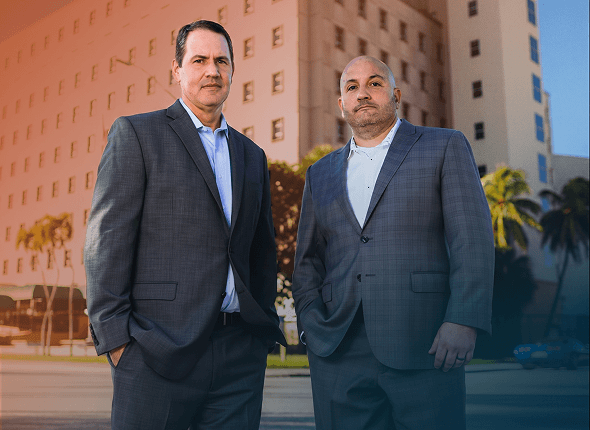
THE TEAM WHO WILL FIGHT FOR YOU
Brett M. Schwartz and John S. Hager bring more than 50 years of combined experience to state and federal criminal cases. You work directly with an attorney who knows your file and is prepared to answer when the situation changes."*" indicates required fields
